Your first step to a career you love!
Welcome to Bryq
If you are here, you have probably been invited to take one or more of the Bryq assessments. This means that your prospective employer has put an equitable process in place, where objective data is used to evaluate applications on job-related merit. By participating in this inclusive process, you are helping create a diverse work environment while ensuring that you have a better career outlook from the get-go.
Here are a few things that you should know
about the Bryq assessments:

Establishing fit
What makes someone excel as a software developer, tester, or accountant? It's not just past experience or technical skills—or even personality alone.
True success is shaped by a combination of cognitive abilities, behavioral tendencies, and skills.
Organizational psychology offers evidence-based frameworks that help us evaluate this broader range of attributes. These tools go beyond personality traits to also assess how individuals think, solve problems, and adapt to the demands of a specific role.
What’s the Structure of the Assessments?
Bryq assessments are designed to reflect real workplace tasks — mixing reasoning, behavior, and skills in short, focused formats. Depending on the type of assessment you're asked to take, the structure may vary slightly. Here's what to expect:





The Interview
If you’re invited to interview after completing your assessment, your interviewer will likely have access to your results — including insights into your strengths, working style, and skill profile.
This means the conversation can go deeper than a typical interview. Instead of asking generic questions, the interviewer can focus on topics that matter most for the role and get to know how you might thrive in the team.
It’s also a chance for you to ask questions, share more about your experience, and make sure the position feels like the right fit for you.
The goal isn’t to quiz you — it’s to have a more meaningful and productive discussion, built on shared insights.
Depending on the position, you may be asked to complete:
1. Profile Fit Assessment (Psychometrics)
This assessment measures your personality traits and cognitive attributes — helping employers understand how your thinking and behavioral preferences align with the role.
Cognitive questions test attention to detail, numerical, verbal, and logical reasoning. They’re designed to be simple but timed — to see how you respond under light pressure. If you don’t answer in time, you’ll simply move to the next question.
Personality questions are untimed and don’t have “right” answers. You’ll be asked to choose which behaviors describe you best (e.g., “cooperative” vs. “assertive”). There’s no ideal personality — the goal is to find roles that match how you work naturally.
Questions alternate between cognitive and personality sections — just like in real work, where you shift between tasks and people.
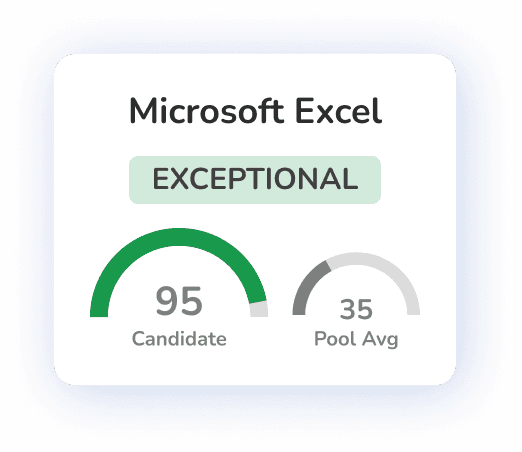
2. Skill Assessments
These short assessments focus on specific hard, soft, hybrid, or job-specific skills — depending on the role you're being considered for.
Here’s what the structure usually looks like:
Time: Most assessments take under 15 minutes
Format: 10–15 multiple-choice questions, often based on real-world scenarios
Content shuffling: Question and answer order may vary between participants
Scoring: You’ll often have one clearly best answer — especially for technical or task-based items. In soft skill assessments, the goal is to understand your judgment and approach, not trick you.
Some skills assessments include sub-skills (e.g., “communication” might include active listening, clarity, tone), but all are designed to be fair, focused, and practical.
Bryq does not provide hire/no-hire decisions, nor does it replace the human part of the process.