The success—or failure—of an organization largely depends on the quality of the people in the lead. Today’s leadership teams must guide and nurture distributed teams and move fast without breaking anything. The speed and agility leaders are required to have today raised the stakes on hiring or promoting the right people.
This is where leadership assessment tools come into play. Leadership assessment tools help HR teams and hiring managers make clearer, fairer decisions. They offer structured ways to measure potential, readiness, and role fit. When used well, they reduce ill-matched hires and surface hidden high-potential talent.
This guide aims to give you some practical information on creating the best leadership team. So, let’s see what leadership assessments do, what core competencies you need to prioritize, common pitfalls to avoid and best tools to implement.
The core purpose of leadership assessments
Leadership assessments exist to answer three core questions, when it comes to hiring and promoting top talent:
Is this person a leader, and can they lead here?
What kind of talent development strategy will close the gap?
As an organization, are we making consistent decisions across candidates?
Leadership assessment tools measure leadership potential, readiness, and fit across situations that reflect the role. They can be quite useful for external hiring for leadership roles, as well as internal promotions, identifying high-potential employees, succession planning, and targeted leadership development.
When they are aligned with business needs and used consistently, they reduce the chance that a hire will fail, make succession decisions less political, and turn subjective impressions into observable behaviors. The value of leadership assessment tools comes in the form of actionable choices; They show who to hire, who to promote, and the talent development you should invest in.
Leadership competencies: What to prioritize
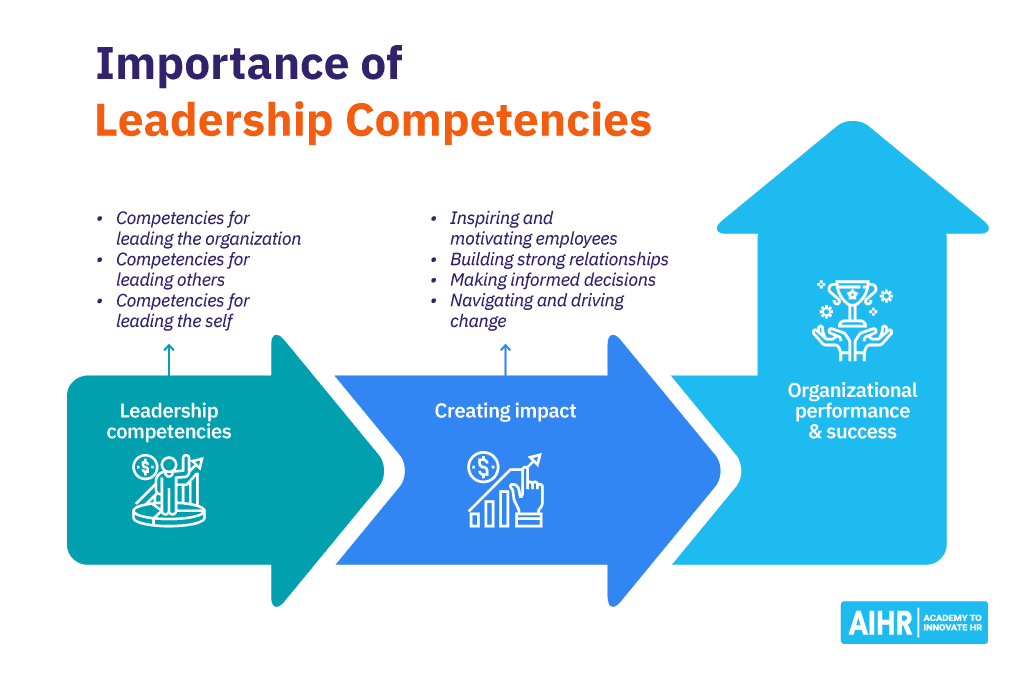
Leadership competencies are not set in stone. Rather, they refer to a specific set of soft and hard skills and attributes that make a candidate a good lead for your team. This is why you need to prioritize them.
(Source)
The image above clearly states that leadership competencies include leading, inspiring, and creating an impact. This means that there’s not one unique set of leadership competencies across industries and positions. But what does that mean for you? And how can you create a framework that makes sense?
The first thing to do is to match your business needs to the core characteristics of a successful team lead or C-level individual. These include:
Strategic thinking and decision-making
Great team leads see beyond the immediate task. They connect team work to business outcomes, can simplify complex trade-offs, and make timely choices under uncertainty. Assess for pattern recognition, clarity of trade-offs, and evidence-based judgment rather than for charisma alone.
Emotional intelligence and self-awareness
Leaders who manage their own emotions and understand those of others create psychological safety, improve retention, and get higher effort from teams. According to Harvard Business Impact, “ Supervisors who act in emotionally intelligent ways will create a more positive work climate, have employees who are able to grow in their jobs, and be more effective.”
Look for self-awareness, calibrated empathy, and the ability to give candid, constructive feedback.
Communication and influence across the board
The best team leads tailor messages for peers, direct reports, and stakeholders. This helps them translate strategy into clear priorities and rally support when needed. Evaluate storytelling, active listening, and stakeholder mapping skills that drive alignment without unnecessary power plays.
Coaching and talent development
Leaders should demonstrate a coach-first mindset. They delegate growth opportunities, diagnose skill gaps, and use regular check-ins to accelerate development. HR departments should probe for examples where candidates raised others’ performance, not just their own.
Adaptability to changes in markets and leadership
Fast-moving organizations need leads who can reframe change as opportunity, pivot plans quickly, and keep teams focused when priorities shift. Measure resilience, adaptable learning, and the capacity to translate change into testable steps.
Execution, discipline and accountability
Delivery is what matters most. Dependable leaders set clear goals, track outcomes, remove blockers, and hold teams to agreed standards. Look for systems thinking (routines, KPIs, feedback loops) and a track record of making an impact.
Leadership assessments should map back to competencies, not the other way around.
Types of leadership assessments
Once you’ve decided on the competencies that matter most to your business, the next step is to determine how to measure them. The key is to choose methods that align with what you’re trying to predict, whether it’s pure potential, or development needs.
Personality and behavioral assessments
Personality profile tests that assess behavioral patterns explore core traits and work-style preferences. They can reveal how individuals think, collaborate, and respond to pressure. On a leadership level, they uncover how someone naturally leads, communicates, and builds relationships. This provides a foundation for coaching and growth plans.
Situational judgment tests and scenario-based assessments
These tests assess how leaders would act, rather than what they know. Candidates are presented with realistic workplace scenarios and asked to choose or rate potential responses. They’re valuable for gauging practical judgment, ethical reasoning, and alignment with organizational values. This is especially useful in people-facing or decision-heavy roles.
Multi-rater feedback
This method collects perspectives from peers, managers, and direct reports to build a holistic view of a leader’s effectiveness. It identifies strengths, blind spots, and behavioral patterns that may not surface in self-assessment. Best used for leadership development and succession planning, multi-rater feedback turns perception into actionable insight.
Leadership simulations
These high-fidelity exercises place participants in real-time business challenges. These can include managing conflict, driving projects, or leading change. Observers evaluate how they prioritize, communicate, and adapt under pressure. While resource-intensive, simulations provide the richest evidence of leadership potential because they measure behavior in context, not just intention.
Cognitive ability and problem-solving tests
Cognitive assessments measure reasoning, learning agility, and the ability to make sense of complex information. Leaders with strong cognitive flexibility tend to navigate ambiguity well and make sound, data-informed decisions. These tests are particularly effective when evaluating candidates for roles that demand strategic thinking and fast, informed judgment.
These methods, when combined, can give HR professionals a multi-dimensional picture of a candidate’s leadership capabilities. The goal here is to test the right things that map back to your organization’s unique leadership competencies model.
Trusted leadership assessment tools and when to use them
Once you understand which competencies matter and the methods that measure them best, the next step is choosing the right tools. HR professionals and hiring teams need solutions that translate data into insight, helping them make fair, evidence-based decisions about who to hire, promote, or develop.
Below are widely trusted tools across different categories, each serving a distinct purpose within a broader leadership assessment strategy.
Bryq
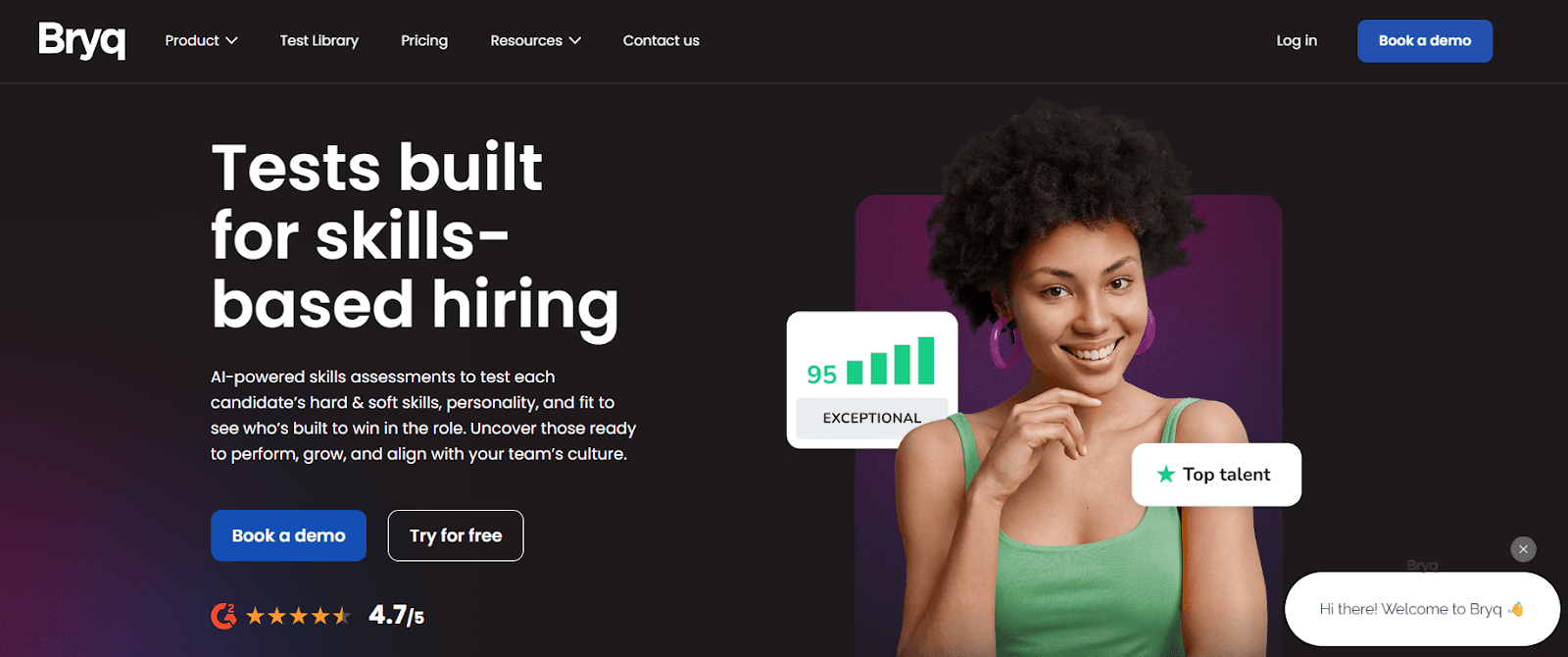
Where it fits: Hiring, shortlisting, validating skills and culture fit with objective talent assessment.
Pricing: Starts at $69, billed monthly; a free 14-day trial is also available
Bryq brings cognitive ability, personality insights, and skills testing together in one science-backed talent assessment that aligns results with the competencies a role truly demands. It highlights cognitive agility, problem-solving strength, work-style alignment and culture fit, offering a clear, actionable view of performance potential.
When it comes to leadership assessment, Bryq identifies behavioral patterns, decision-making abilities, and long-term potential. These signal whether someone can lead people, navigate complexity and grow with the organization. With Bryq, HR teams gain a consistent, data-driven way to differentiate strong contributors from future leaders, reducing reliance on intuition and surface-level indicators.
MBTIonline
Where it fits: Team development and self-awareness workshops (not recommended as a sole hiring screen)
Pricing: $99.95/participant for teams of 3 and over
MBTIonline measures preferences in perception and decision-making, helping leaders understand how they interact with others. While not recommended for hiring, it’s a valuable tool for team-building, coaching, and career development contexts where self-awareness enhances collaboration.
DiSC
Where it fits: Team building and manager development
Pricing: $90/profile; volume discounts apply
DiSC is a behavioral profiling framework that helps leaders understand their preferred communication and collaboration styles, and how those styles impact others.
While it doesn’t predict leadership potential, it’s a powerful developmental tool for improving emotional intelligence, conflict management, and influence within teams. Often used in leadership training, it helps new or emerging managers flex their approach to motivate and connect effectively.
Wonderlic
Where it fits: Screening and validation of general reasoning ability
Pricing: License-based; quoting available upon contacting a representative
A long-established cognitive ability test, Wonderlic assesses general intelligence, comprehension, and decision-making capability. Though traditional, it remains popular for its simplicity and standardized approach. Organizations use it to benchmark cognitive capacity in management and leadership candidates where critical thinking is key.
Leapsome
What it measures: Reviews, 360-degree reviews, goals and learning in one platform
Pricing: Custom, available upon contacting a representative
Leapsome is an integrated people enablement platform that combines multi-rated feedback, performance reviews, goal tracking, and learning modules in one cohesive system. It helps HR and leadership teams create continuous development loops where insights from reviews directly inform coaching, upskilling, and succession plans. For organizations aiming to embed feedback into everyday culture, Leapsome provides a structured yet flexible framework, connecting individual growth with company-wide performance goals.
Culture Amp
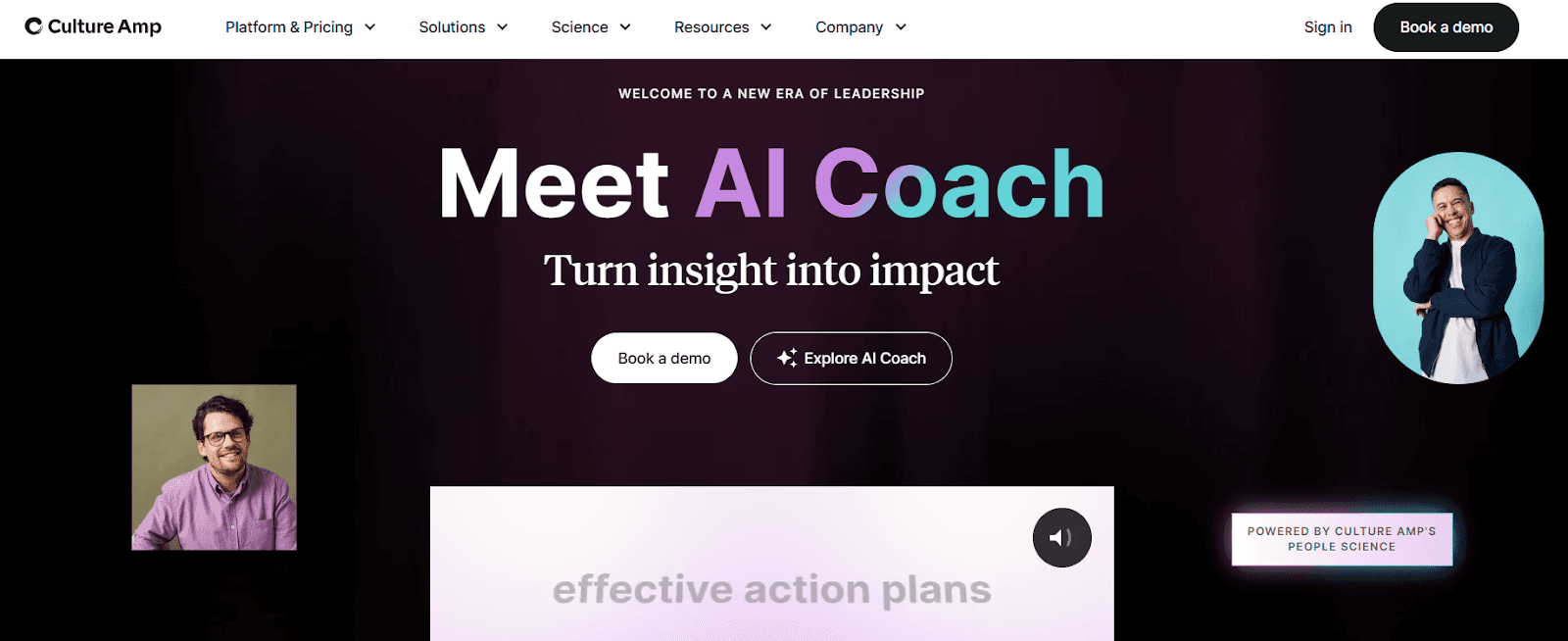
What it measures: Multi-rater feedback, development analytics and engagement signals
Pricing: Custom, available upon contacting a representative
Culture Amp is a comprehensive platform for employee feedback, engagement, and development, with a strong emphasis on multi-rater assessments. It enables organizations to collect structured input from managers, peers, and direct reports, turning feedback into actionable insights that drive leadership growth and talent development.
These tools aim to enhance HR professionals’ judgement and help streamline workflows that will put prospective leaders into a growth trajectory—or help professionals hire new ones. Tools, of course, differ in purpose. By aligning each one to your leadership competency model, you create a process that’s built to reveal true potential.
How to choose the right tool
Choosing the right tool is just as important as knowing which leadership assessment tools are out there. Here’s a small checklist of things to keep in mind before researching the leadership assessment tool that’s fit for your business.
Match the tool to your goal
Decide whether you are hiring, promoting, or developing leaders. A cognitive test may be essential for selection, while a multi-rater platform is more useful for development.
Confirm validity and reliability
Ensure the tool has been psychometrically validated. It should consistently measure what it claims and predict leadership outcomes.
Ensure bias mitigation and fairness
Look for assessments that have been designed and tested to minimize demographic or cultural bias. This protects both candidates and the organization.
Confirm actionable outputs
Reports should map directly to the competencies you care about, with clear insights for decision-making, coaching, or succession planning.
Check integration, scale, time-to-complete, and candidate experience
Tools should work within your existing HR systems, scale as your organization grows, and provide a smooth, respectful experience for candidates.
Legal and privacy compliance
Make sure the tool adheres to GDPR, EEOC, and local labor regulations. Candidate data should be secure and handled ethically.
The wrong way is selecting a tool solely because it’s popular or inexpensive, without checking whether it measures the competencies you need.
The right way is to start with your leadership framework, then choose a tool that directly evaluates your requirements when it comes to leadership assessment and provides clear, actionable insights. For example, pairing a validated cognitive and situational judgment test for promotion decisions while hiring for skill can help you pick a team lead that has well-rounded capabilities.
Common pitfalls to avoid
Even the best-designed leadership assessment program can fall short if common mistakes aren’t addressed. HR professionals and hiring teams should be mindful of these pitfalls to ensure assessments deliver actionable insights.
Over-reliance on personality-only tests
Using just one type of assessment, such as a personality inventory, provides an incomplete view of leadership potential. Competency, cognitive ability, and situational judgment must also be considered to predict real-world performance.
Assessment overload
Bombarding candidates with too many tests can create fatigue, frustration, and disengagement. Select a focused set of assessments aligned to your competency framework, and prioritize quality over quantity.
No calibration
Without calibration sessions or reviewer alignment, scores can be interpreted inconsistently across teams. HR managers and predecessors must standardize evaluation criteria to maintain fairness and reliability.
Lack of transparency
Candidates and internal stakeholders should understand the purpose, process, and outcomes of assessments. Hidden or poorly explained evaluations can erode trust and reduce engagement.
Ignoring follow-up development
Assessments are not a one-and-done exercise. Without targeted development plans, coaching, or feedback loops, insights fail to translate into growth or performance improvement.
By avoiding these mistakes, organizations ensure their leadership assessment strategy is not only predictive and fair but also actionable. Leadership assessment tools are important, but the strategy is crucial when creating a pipeline of capable leaders ready to drive results.
The takeaway
Leadership assessments are powerful tools when used thoughtfully, providing clarity, fairness, and actionable insights for hiring, promoting, and developing talent. They help organizations align decisions with competencies, reduce bias, and create structured pathways for growth.
The best approach is to focus on high-impact assessments, and iterate based on results, ensuring every test drives outcomes that make sense for your organization.
When paired with coaching, calibration, and follow-up development, assessments turn into instruments for building stronger, more capable leaders who can thrive in a dynamic workplace.
FAQs
Here are some of the most commonly asked questions on leadership assessment tools.
1. How do I choose the right leadership assessment method?
Start by defining the goal; hire, promote, or develop. Then select methods that match the competencies you want to measure, ensuring validity, reliability, and actionable outputs.
2. What types of leadership assessments exist?
Common methods include personality and behavioral assessments, cognitive ability and problem-solving tests, situational judgment tests, multi-rater feedback, and simulations or assessment centers. Each provides a different lens into leadership potential or effectiveness.
3. When should situational judgment tests (SJTs) be used?
SJTs are ideal for evaluating decision-making and applied judgment in role-specific scenarios. They are most effective during promotion or hiring stages when practical leadership skills need to be assessed.
4. How can assessments reduce bias in leadership decisions?
Using validated, competency-aligned tools, combined with structured scoring and calibration, helps minimize unconscious bias. Transparent processes and legally compliant assessments further ensure fairness.
5. Can personality tests predict leadership success?
Personality tests alone offer insight into behavioral tendencies but are not sufficient predictors of leadership performance. They are most effective when combined with cognitive tests, situational assessments, or observed behaviors.
Author
Bryq is composed of a diverse team of HR experts, including I-O psychologists, data scientists, and seasoned HR professionals, all united by a shared passion for soft skills.