


See Where You Stand
Two free tools to get started. No account needed, no email gate. Just answers.
AI Exposure Calculator
AI Hiring Readiness Scorecard





Introducing the AI Fluency Assessment
Your people use AI every day. Now you can measure how well.
The only simulation-based assessment that measures practical AI fluency: how people actually work with AI tools, not which one they've memorized. Use it to screen candidates or benchmark your current team. Tool-agnostic. Built on peer-reviewed research, not a proprietary framework.
Tool-Agnostic
Skills that transfer across any AI tool

Research-Grounded
Built on 6 peer-reviewed frameworks

Simulation-Based
Realistic tasks, not textbook quizzes
What does the assessment actually measure?
Five scientifically validated dimensions of AI fluency.
No pass/fail. Employers get a 0–100 score across three fluency levels and a detailed profile of each candidate’s AI working style. The assessment takes approximately 15 minutes.
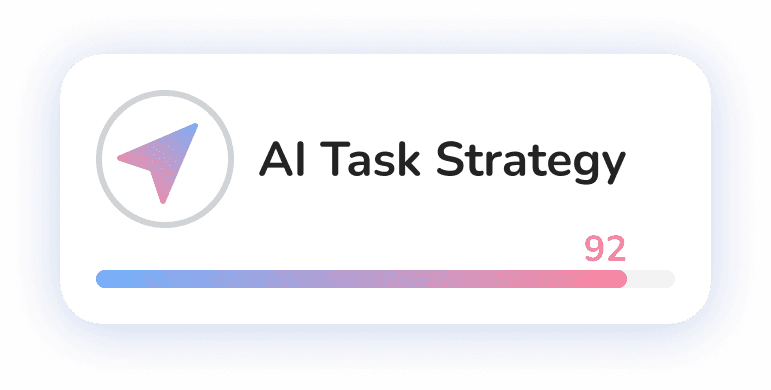
1. AI Task Strategy
Can they decide when AI is the right tool for a task, and when it isn’t?
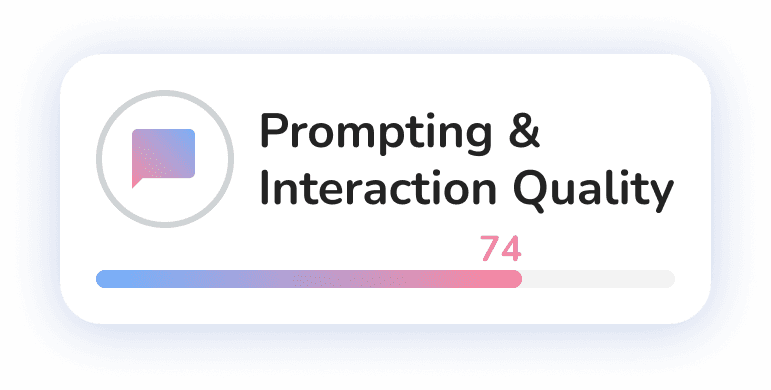
2. Prompting & Interaction Quality
Can they get useful, specific results from AI tools?
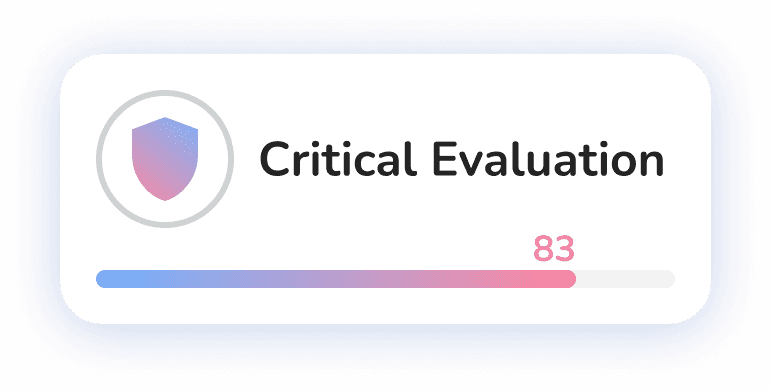
3. Critical Evaluation & Validation
Do they question AI output, or copy-paste it without checking?
4. Ethical & Responsible Use
Do they understand privacy, bias, and when to say no?
5. Workflow Integration & Output Quality
Turning AI output into professional work.
The case for measuring AI Fluency
Self-reported AI skills on resumes are unreliable. LinkedIn profiles show a 142× increase in AI-related skills, but there’s no way to verify what any of it means in practice. Most existing assessments either test narrow coding ability or surface-level awareness that tells you nothing about workplace performance.
75%
of knowledge workers
now use AI at work
*Microsoft Work Trend Index, 2024
63%
of employers
say skills gaps are their primary barrier to transformation
*WEF Future of Jobs Report, 2025
EU AI Act
Art. 4
requires organisations to ensure adequate AI literacy among staff
*Regulation EU 2024/1689
Companies that measure real AI fluency, in candidates and in current employees, will hire better and upskill faster. The rest will keep guessing.
Research & Insights on AI Fluency
Published by Bryq’s I/O psychology and hiring research team.
PAPER
AI Is Reshaping Job Skills, Not Job Titles. Here's What Hiring Teams Should Assess Instead.
AI is reshaping job skills, not titles. Bryq's 2026 analysis reveals which competencies face automation and how hiring teams should assess candidates differently.
BLOG POST
Article 4 of the EU AI Act: What HR and Hiring Teams Must Do About AI Literacy Before August 2026
Article 4 of the EU AI Act mandates AI literacy for all providers and deployers of AI systems. Here's what HR and hiring teams must do before August 2026
BLOG POST
Why Every Hiring Process Now Needs an AI Fluency Assessment
75% of knowledge workers use AI daily. Yet most hiring processes have no way to measure AI skills in candidates. Here's why self-reported fluency is noise — and what a real AI proficiency assessment looks like.
REPORT
AI at Work: The Fluency Gap
Research report on AI adoption, skills gaps, and why measuring AI fluency matters. 75% of knowledge workers use AI, yet most organisations lack reliable ways to assess capability.
FAQ
Find answers to the most frequently asked questions