AI SKILLS FOR HR

AI SKILLS FOR HR

Build an Individual Development Plan

Build an Individual Development Plan

Turn a career conversation into a plan the employee owns.

Turn a career conversation into a plan the employee owns.

What it does

Build an Individual Development Plan is a free AI skill for employees, people managers and HR partners. Give it notes from a career conversation. It drafts a development plan with two or three goals, a 70-20-10 mix of experience, people and learning, and a check against the time available.

It works in Claude, ChatGPT, Microsoft Copilot and other AI Assistants.

You give it

You give it

  • The employee's development aim, in their own words

  • Their current role and what it needs from them over the next year

  • Notes from the conversation, or the strengths and areas to grow you discussed

  • Optional: time available, busy periods, budget, feedback the employee agrees with

You get

You get

  • The employee's aim, in their words, and two or three strengths to build on

  • Two or three goals, each with a "done looks like" line

  • For each goal, a mix of experience, people and learning, with estimated hours

  • A time check against the time available

  • Support needed, milestones, check-ins and first steps

How it helps

It works like an IDP template filled in from your 1:1 notes, written to the employee rather than about them.

Most learning happens at work

Each goal mixes about 70% experience, 20% people and 10% courses: a common rule of thumb, not a research finding, adjusted to the goal. It uses real opportunities from your notes.

A plan that fits the time

It estimates hours per activity and compares the total with the time available. If it doesn't fit, it cuts or phases goals and says so.

The employee owns it

It starts from the employee's aim and is written to them. If the notes are mostly the manager's view, it's marked a draft for the employee to change. It never rates the person.

Why we think it's useful

A development plan should start from what the employee wants and fit the hours they really have. A plan sized to a busy quarter is one they can keep picking up, week after week.

A development plan should start from what the employee wants and fit the hours they really have. A plan sized to a busy quarter is one they can keep picking up, week after week.

A development plan should start from what the employee wants and fit the hours they really have. A plan sized to a busy quarter is one they can keep picking up, week after week.

BEFORE

BEFORE

BEFORE

What the user pasted

What the user pasted

What the user pasted

1:1 notes, 3 July, S.A. (Marketing Coordinator, Brightfield Software) with manager Karim.


S. wants to move towards product marketing, maybe a PMM role in a year or so. Good at writing, the webinar landing pages she did got great feedback from sales. Less confident presenting, freezes a bit with execs. Doesn't know much about pricing/positioning. Q4 is crazy (events season) so realistically 2–3 hrs a week max, less in Oct–Nov. We have a €600 learning budget each. Jonas (PMM) said he'd be happy to help. Maybe she could do the competitor one-pager for the new release?


Karim: "I'd also like her to be faster with the campaign reports."

AFTER

AFTER

AFTER

Part of the finished plan

Part of the finished plan

Part of the finished plan

Goal

Goal

Goal

Done looks like

Done looks like

Done looks like

Est. hours (total)

Est. hours (total)

Est. hours (total)

Target date

Target date

Target date

1. Positioning basics

1. Positioning basics

1. Positioning basics

You draft positioning and a competitor one-pager that Jonas signs off with light edits

You draft positioning and a competitor one-pager that Jonas signs off with light edits

You draft positioning and a competitor one-pager that Jonas signs off with light edits

20

20

20

Sep

Sep

Sep

2. Presenting to senior people

2. Presenting to senior people

2. Presenting to senior people

You give a 10-minute update to the leadership team and answer their questions yourself, without Karim stepping in

You give a 10-minute update to the leadership team and answer their questions yourself, without Karim stepping in

You give a 10-minute update to the leadership team and answer their questions yourself, without Karim stepping in

20

20

20

Dec

Dec

Dec

Time check: About 40 hours over six months. Jul–Aug: about 10 hours a month (Goal 1). Sep: about 10 hours (sales talk and workshop). Oct–Nov: about 2 hours a month. Dec: about 6 hours for the leadership update. Each month fits within 2–3 hours a week. This fits the time you have. Faster campaign reports was left out as a development goal; see Notes.

Time check: About 40 hours over six months. Jul–Aug: about 10 hours a month (Goal 1). Sep: about 10 hours (sales talk and workshop). Oct–Nov: about 2 hours a month. Dec: about 6 hours for the leadership update. Each month fits within 2–3 hours a week. This fits the time you have. Faster campaign reports was left out as a development goal; see Notes.

Time check: About 40 hours over six months. Jul–Aug: about 10 hours a month (Goal 1). Sep: about 10 hours (sales talk and workshop). Oct–Nov: about 2 hours a month. Dec: about 6 hours for the leadership update. Each month fits within 2–3 hours a week. This fits the time you have. Faster campaign reports was left out as a development goal; see Notes.

Goal 1: Positioning basics

Goal 1: Positioning basics

Goal 1: Positioning basics

Type

Type

Type

Activity

Activity

Activity

Who helps

Who helps

Who helps

When

When

When

Est. hours

Est. hours

Est. hours

Experience (~70%)

Experience (~70%)

Experience (~70%)

Write the competitor one-pager for the new release

Write the competitor one-pager for the new release

Write the competitor one-pager for the new release

Jonas reviews

Jonas reviews

Jonas reviews

Jul–Aug

Jul–Aug

Jul–Aug

14

14

14

People (~20%)

People (~20%)

People (~20%)

Sit in on two of Jonas's positioning sessions; ask him for written feedback on the draft

Sit in on two of Jonas's positioning sessions; ask him for written feedback on the draft

Sit in on two of Jonas's positioning sessions; ask him for written feedback on the draft

Jonas

Jonas

Jonas

Jul–Aug

Jul–Aug

Jul–Aug

4

4

4

Courses (~10%)

Courses (~10%)

Courses (~10%)

A short online positioning course, within the €600 budget

A short online positioning course, within the €600 budget

A short online positioning course, within the €600 budget

[Provider TBC]

[Provider TBC]

[Provider TBC]

Jul

Jul

Jul

2

2

2

Fictional company, role, candidate and people.

Get this skill

Free to use and adapt. Provided as is: AI tools don't always follow instructions, so check every output.

Free to use and adapt. Provided as is: AI tools don't always follow instructions, so check every output.

Free to use and adapt. Provided as is: AI tools don't always follow instructions, so check every output.

Which AI do you use?

Closing the predictive-validity loop requires structured pre-hire data on every requisition. Assessment scores. Behavioral profiles. Hard-skills signals including AI fluency. Without that dataset, you cannot correlate pre-hire signals with post-hire QoH. You cannot tune the next cohort sharper than the last. The hiring system stays static. The score drifts.

Bryq builds the pre-hire dataset that makes the loop possible.

Claude

ChatGPT

Microsoft Copilot

Something else (Gemini, Mistral and others)

Before you use: use an AI your company has approved, share only what the task needs (initials or IDs work), and check every draft.

Before you use: use an AI your company has approved, share only what the task needs (initials or IDs work), and check every draft.

Before you use: use an AI your company has approved, share only what the task needs (initials or IDs work), and check every draft.

Better with Bryq

Already use Bryq? Add your assessment results.

Link your Bryq account to your AI assistant, and five skills can include your candidates' Bryq results. For example, your debrief shows them next to the interview notes, and your follow-up questions focus on where the two differ. The link only reads data; it never changes anything in Bryq. Results you bring into a chat are shared with your AI provider, like anything else you paste in. Every skill works fully without it.

FAQ

Find answers to the most frequently asked questions

The employee's aim in their own words, two or three strengths, and two or three goals, each with a clear "done looks like" line and a mix of experience, people and learning. Add estimated hours, a check against the time available, the support needed, milestones and first steps. This skill drafts each part from your notes.
No. If your notes describe performance concerns, required standards or consequences, it says these belong in a separate process run with HR, and builds only the development plan.
No. It never promises or implies a promotion, pay change or new role. It writes "prepares you for", not "leads to".
The time check shows whether the plan fits. If not, it cuts or phases goals and tells you.

Related skills

Prepare a Talent Review

Prepare a Talent Review

Prepare a Talent Review

PREVIOUS STEP

PREVIOUS STEP

PREVIOUS STEP

Agree on development actions on evidence, then turn them into a plan here.

Agree on development actions on evidence, then turn them into a plan here.

Compare your shortlist on the criteria, not on gut feel.

All 12 AI skills for HR

All 12 AI skills for HR

All 12 AI skills for HR

Every skill, from the hiring brief to the development plan.

Every skill, from the hiring brief to the development plan.

Every skill, from the hiring brief to the development plan.

Candidate completing the Bryq AI Fluency Assessment
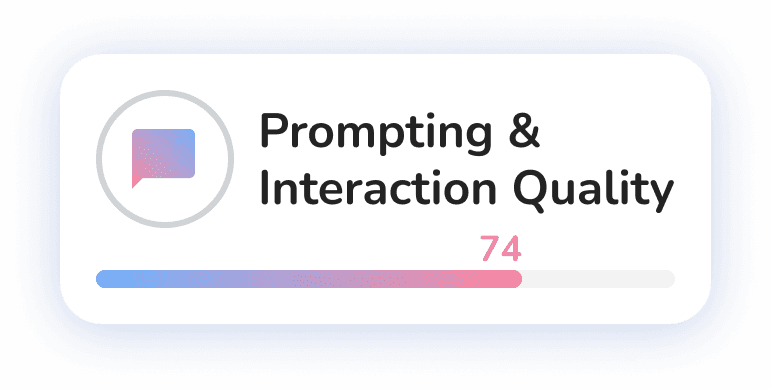
Prompting and Interaction Quality dimension score: 74
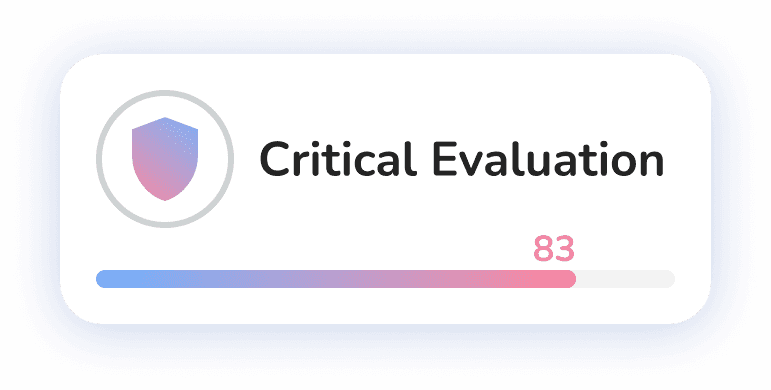
Critical Evaluation dimension score: 83
AI Fluency Assessment label
Pink AI Star
Blue AI Star
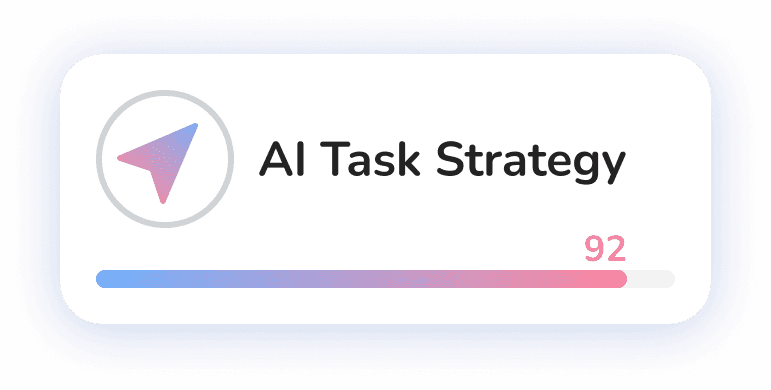
AI Task Strategy dimension score: 92

Hiring for AI fluency too?

Hiring for AI fluency too?

To see how well candidates and employees work with AI, visit the AI Fluency Hub: free tools, research and the framework Bryq uses to measure AI fluency.

To see how well candidates and employees work with AI, visit the AI Fluency Hub: free tools, research and the framework Bryq uses to measure AI fluency.

Better hiring starts
with better evidence.

Bryq measures cognitive ability, personality traits, and hard skills including AI fluency in one integrated candidate profile.

Better hiring starts
with better evidence.

Start hiring based on

real data.

Better hiring starts
with better evidence.

Bryq measures cognitive ability, personality traits, and hard skills including AI fluency in one integrated candidate profile.